Manufacturing ERP in Tanzania for Small and Growing Factories

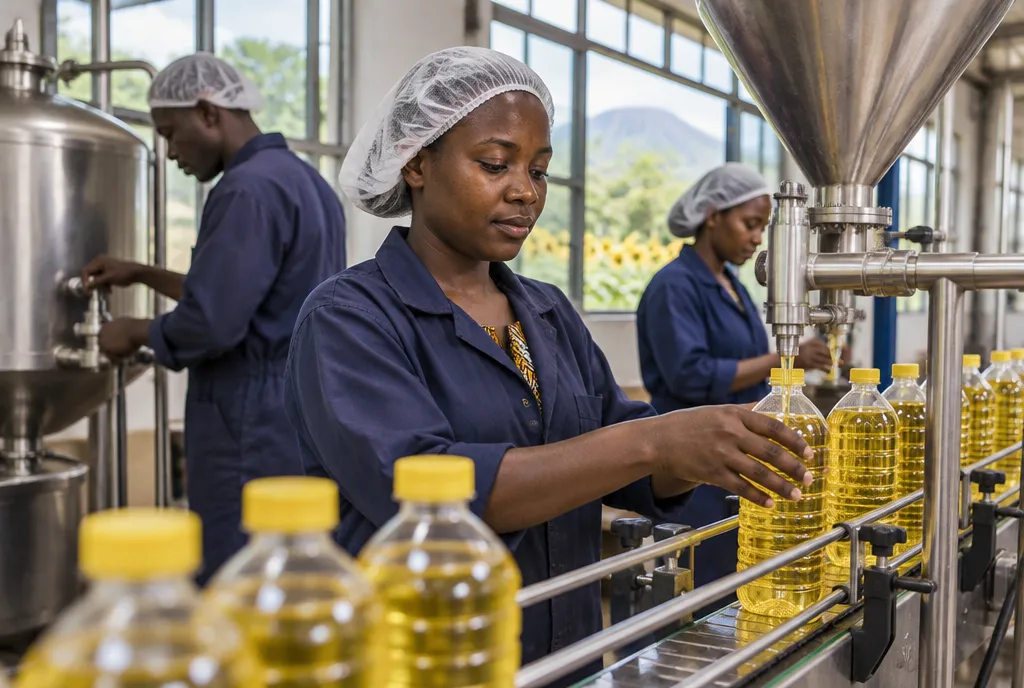
Whether you press sunflower oil in Singida, mix animal feed in Morogoro or bottle water in Dar es Salaam, the money is made between the store, the production floor and the customer. SmartBiashara links those steps in one system, from buying raw materials to collecting payment from distributors.

  • Recipes and production runs on Enterprise and Enterprise Pro
  • Raw materials, finished goods and depots as separate locations
  • Distributor credit, invoices and supplier ledgers
  • Machines and equipment tracked with asset management
Manufacturing in Tanzania

Manufacturing · Recipes

Production

New

Runs this week

14

Cost per unit (1 L oil)

TSh 3,180

Raw materials low

2

Planned2

Sunflower oil 1 L × 600

Bread loaf × 1,200

In production1

Sunflower oil 5 L × 120

Finished2

Peanut butter 400 g × 300

Bread loaf × 1,150

What makes manufacturing hard to run

The problems we hear most often from owners in this trade.

  • Three sets of figures that never agree

    The storekeeper has a book, the production supervisor has a whiteboard and sales has its own spreadsheet. At month end the owner spends days reconciling instead of planning.

  • Input prices move faster than your price list

    Sunflower seed, maize bran, PET preforms and cartons change price with the season. If your selling price was set a year ago, some products may already be selling at a loss.

  • Distributors who owe too much

    Wholesalers and agents take stock on credit and pay late. Without credit limits and a clear statement, a single large debtor can tie up a month of working capital.

  • Stock scattered across sites

    Inputs sit at the factory, finished cartons go to a depot and some stock rides on a delivery truck. Nobody can say with confidence how much is available to sell today.

  • Machines without a history

    Mixers, pumps, sealers and generators are the most expensive things you own. When one breaks, there is no record of when it was bought, where it sits or who was using it.

How SmartBiashara works for manufacturing

Production built on recipes

Define each finished product by the inputs it consumes, for example litres of crude oil, a bottle, a cap and a label for every 1-litre unit. Recording a production run issues those inputs from stock and adds the finished units in one step. The manufacturing module is available on the Enterprise and Enterprise Pro plans.

  • One recipe per finished product
  • Inputs issued from stock when a run is recorded
  • A dated record of every run

Unit cost that follows your purchase prices

Raw-material costing starts from what you recorded at purchase. When the next delivery of seed or packaging costs more, the cost of later runs reflects it. Compare that cost with the prices you charge wholesale and retail customers before the margin disappears.

  • Cost built from recorded purchase prices
  • FIFO or LIFO stock accounting
  • Profit and stock reports

Raw-material buying with a paper trail

Order inputs with purchase orders and receive them with goods received notes, so quantities and prices are captured at the gate. Supplier ledgers show what you owe each supplier and on what credit terms. Batch and expiry details can be kept for inputs that spoil, such as milk powder or flavourings.

  • Purchase orders and GRNs
  • Supplier balances and credit
  • Batch and expiry tracking

Factory, depot and shop as separate locations

Set up the raw-material store, the factory floor, a depot and a factory shop as their own locations. Inter-store transfers record every carton that moves between them, and stock reports show each site separately. Enterprise covers up to 50 locations and Enterprise Pro has no cap.

  • Stock by location in real time
  • Transfers between stores and warehouses
  • Head-office view of every site

Selling to distributors on credit

Raise quotations, convert them to invoices and send them by WhatsApp or email. With CRM you can set a credit limit for each distributor and see their balance before loading the next order. Retail sales through a factory shop use the same POS, with M-Pesa, Tigo Pesa and Airtel Money recorded at checkout.

  • Quotation to invoice conversion
  • Credit limits and customer balances
  • Bulk pricing for wholesale buyers

Equipment, staff and books in the same system

Asset management keeps a register of machines and equipment, available from the Standard plan and included on Enterprise. HR keeps staff records and roles, with payroll support for NSSF and PAYE. Sales, purchases, production and expenses all land in one set of accounts that your accountant can export to Excel or PDF.

  • Asset register for plant and machinery
  • Staff records, roles and payroll
  • Accounting and exportable reports

One production day at a small feed mill

Take an example: a feed mill outside Morogoro producing 50 kg bags of layers mash and broiler starter, selling through two depots and a group of agro-dealers.

  1. 1

    Morning delivery at the gate

    A truck brings maize bran and soya cake. The storekeeper checks it against the purchase order and records a GRN, so stock and the supplier balance update with the actual weights and prices.

  2. 2

    Plan the run

    The supervisor checks raw-material levels against the recipe for 200 bags of layers mash and sees that premix is short. A purchase order goes out before the afternoon shift.

  3. 3

    Record production

    When the shift ends, the run is entered with the number of bags produced. Inputs drop at the mill store and finished bags appear at the factory location with a unit cost attached.

  4. 4

    Move stock to the depots

    Eighty bags are transferred to the Dodoma depot and forty to the factory shop. Each depot manager sees the incoming stock against their own location.

  5. 5

    Sell and collect

    An agro-dealer orders 30 bags on credit. The sales team checks his balance against his limit, invoices him by WhatsApp and records his M-Pesa payment when it arrives.

  6. 6

    Review at day end

    The owner looks at production, sales by depot and money owed by distributors, then compares this week's cost per bag with the selling price.

Manufacturing · Recipes

Production

New

Runs this week

14

Cost per unit (1 L oil)

TSh 3,180

Raw materials low

2

Planned2

Sunflower oil 1 L × 600

Bread loaf × 1,200

In production1

Sunflower oil 5 L × 120

Finished2

Peanut butter 400 g × 300

Bread loaf × 1,150

Illustrative screen with sample data

A factory production screen: recipe inputs being issued from the raw-material store and finished units added to stock with their cost.

What changes for your business

  • Pricing decisions backed by real costs

    You review selling prices against what each unit actually cost to make this month, so seasonal input price rises do not eat your margin unnoticed.

  • Working capital you can see

    Stock at every site, money owed by distributors and money owed to suppliers sit in one place, which makes cash planning far less of a guess.

  • Less time reconciling, more time producing

    Store, production, sales and accounts share the same records, so month-end closing stops being a week of comparing notebooks.

  • Control over credit customers

    Credit limits and up-to-date balances let your team say no to an overdue distributor politely and with the numbers in hand.

Frequently asked questions

Still have a question? Ask our team on WhatsApp, phone or email.

What is the best manufacturing ERP for a small factory in Tanzania?

The best choice is a system that connects raw materials, production, sales and accounts without needing a full-time IT team. Large international ERPs can do this but often need consultants, foreign-currency licences and long setup. SmartBiashara is priced in TSh, runs in a browser and covers recipes, production runs, multi-location stock and credit sales on the Enterprise and Enterprise Pro plans. Test it with one product line during the 14-day free trial before deciding.

Which plan do I need for manufacturing?

You need Enterprise at TSh 55,000 a month or TSh 550,000 a year, or Enterprise Pro at TSh 850,000 a year. Both include manufacturing, repair, project management and the API connector. Both prices are quoted before VAT and service levy.

What kinds of producers can use SmartBiashara?

It suits producers who turn a known list of inputs into finished goods. Examples include edible oil pressing, animal feed, bottled water and juice, soap and detergents, bakery products, furniture and packaged foods. If your process involves complex engineering drawings or machine scheduling, talk to our team first so we can tell you honestly what fits.

Does SmartBiashara connect to TRA EFD machines?

SmartBiashara records your sales and produces the reports you need for your records. For EFD or VFD questions, ask our team about your fiscal-device setup.

Can I run it on my own server instead of the cloud?

Yes, through Own Your ERP. It is a one-time white-label licence starting at TSh 1,500,000 for the first launch slots, with every module included on your own domain and private server. Setup takes 4 to 7 working days, you pay 60% to reserve and 40% at handover, and renewal from year 2 is TSh 425,000 a year.

Put one production line on SmartBiashara

Start a 14-day free trial, enter a single product with its recipe and record this week's runs. Prefer a guided start? Book a demo and we will map your store, factory and depots with you.