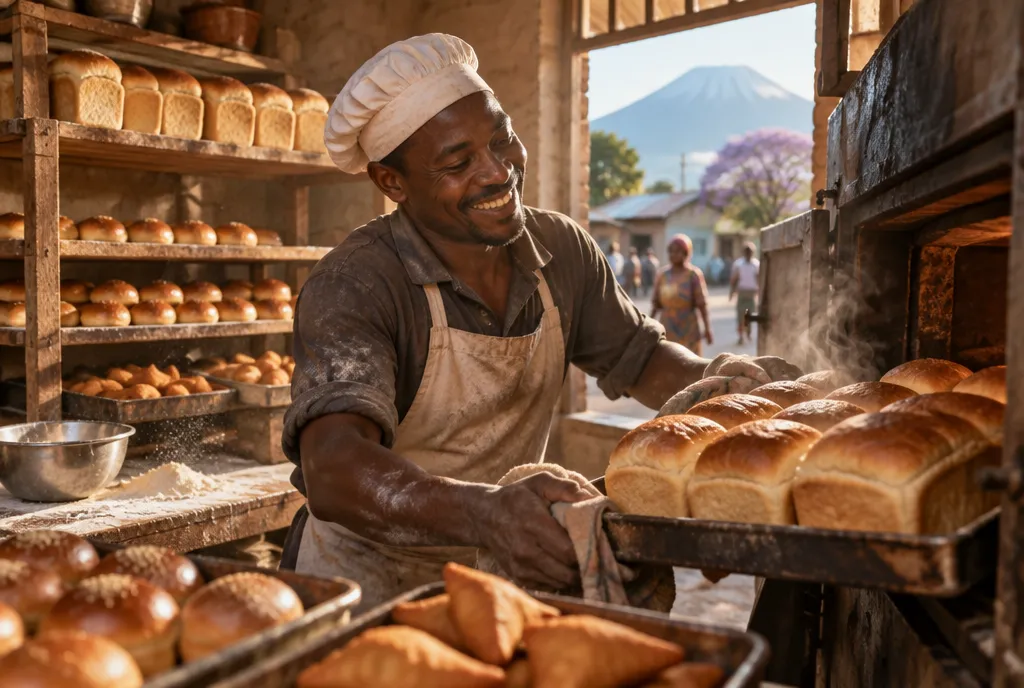
Bakery Management Software in Tanzania for Daily Production and Fresh Stock

Know how many loaves came out of the oven, how many sold at the counter, how many went to shops on credit and how many came back stale. SmartBiashara connects your recipes, flour and sugar stock, shop sales and delivery customers, so the cost of every tray and the money owed by every duka are on record.

  • Recipes and production runs with cost per batch
  • Flour, sugar, yeast and packaging tracked as raw stock
  • Batch and expiry dates on bread, buns and cakes
  • Credit sales to shops with invoices sent on WhatsApp
Bakeries in Tanzania

Manufacturing · Recipes

Production

New

Runs this week

14

Cost per unit (1 L oil)

TSh 3,180

Raw materials low

2

Planned2

Sunflower oil 1 L × 600

Bread loaf × 1,200

In production1

Sunflower oil 5 L × 120

Finished2

Peanut butter 400 g × 300

Bread loaf × 1,150

What makes bakeries hard to run

The problems we hear most often from owners in this trade.

  • You do not know what a loaf really costs

    Flour and sugar prices move every few weeks, but the price on the shelf stays the same. Without a recipe cost, margins can shrink for months before anyone notices.

  • Flour disappears faster than bread appears

    Fifty bags of wheat flour go into the store and the output does not match. Without production records it is impossible to tell spillage, poor yield and theft apart.

  • Stale bread eats the profit

    Bread baked on Monday is still on the shelf on Wednesday, and returns from shops are thrown away without being counted.

  • Shops owe you and nobody is sure how much

    Delivery riders drop crates at dukas on madeni (credit), and the record lives in a notebook or the rider's memory. Collecting at month end turns into an argument.

  • Owner stuck at the bakery from 4 am

    Because the numbers only exist on paper at the bakery, the owner has to be there at every shift to know what was produced and sold.

How SmartBiashara works for bakeries

Recipes and daily production runs

Write each product as a recipe: for example, a 50 kg bag of flour, sugar, yeast, oil and packaging making a set number of loaves. Each morning the baker records the production run, ingredients come out of stock, and finished bread goes into stock with a cost per unit. Recipes and production runs come with the Manufacturing module, available from the Enterprise plan.

  • Ingredient quantities per batch
  • Raw materials deducted on each production run
  • Cost per batch and per unit
  • Finished goods added to sellable stock

Raw material stock and suppliers

Flour, sugar, margarine, eggs and bread bags are tracked like any other stock item, with low-stock alerts before a shift starts short. Raise purchase orders to your millers and suppliers, receive deliveries with a goods received note, and keep each supplier's balance and credit in a supplier ledger.

  • Low-stock alerts for key ingredients
  • Purchase orders to millers, received with a GRN
  • A ledger and credit balance for each supplier

Fresh stock by batch and expiry

Give each day's bake a batch and expiry date, so counter staff sell the oldest bread first and you can see what is about to go stale. Returns and unsold bread are recorded as stock adjustments, which turns waste into a figure you can work on.

Counter sales with mobile money

The shop counter uses the same POS, with barcode scanning for packed items or quick product buttons for loose buns and cakes. Customers pay with cash, M-Pesa, Tigo Pesa or Airtel Money, and mobile money payments are reconciled against each sale.

Delivery customers on credit

Set up each shop or hotel you supply as a customer with its own credit limit. Deliveries are recorded as credit sales or invoices that you send by WhatsApp or email, and receivables and aging reports show who has paid and who is overdue. Customer accounts with credit limits come with the CRM module, which starts on the Basic plan.

  • Customer credit limits
  • Delivery invoices sent on WhatsApp or email
  • Aging reports for unpaid shops

Reports for the owner who is not at the oven

Production, sales, wastage and profit reports are available in a browser from anywhere. If you run a second bakery or a separate sales outlet, multi-store management keeps stock and transfers for each location in one account.

One working day at a bakery in Mwanza

An example: a bakery producing bread and buns for its own shop and for about thirty dukas nearby, with two bakers, a counter attendant and a delivery rider.

  1. 1

    4 am: record the bake

    The head baker records two production runs on a phone. Flour, sugar and yeast drop in stock, and the loaves and buns appear as today's batch with tomorrow's expiry date.

  2. 2

    6 am: load the delivery

    The rider's crates are recorded against each shop on the route. Shops that pay on delivery settle by mobile money; the rest go on their credit account.

  3. 3

    7 am to 6 pm: counter sales

    The attendant sells from the oldest batch first, and every sale, cash or mobile money, reduces the bread on the shelf.

  4. 4

    Afternoon: take returns

    Unsold bread collected from shops is recorded as a stock adjustment and written off, so the day's waste is counted, not guessed.

  5. 5

    Evening: check and reorder

    The owner reviews production against sales and waste, sees flour below the reorder level and sends a purchase order to the miller for the morning.

Manufacturing · Recipes

Production

New

Runs this week

14

Cost per unit (1 L oil)

TSh 3,180

Raw materials low

2

Planned2

Sunflower oil 1 L × 600

Bread loaf × 1,200

In production1

Sunflower oil 5 L × 120

Finished2

Peanut butter 400 g × 300

Bread loaf × 1,150

Illustrative screen with sample data

A bakery production run in SmartBiashara: a bread recipe listing flour, sugar, yeast and bags, the ingredients deducted, and the cost per loaf for today's batch.

What changes for your business

  • Prices that follow your costs

    When flour goes up, the recipe cost shows how much each loaf now costs to make, so you can adjust the price or the size with real figures.

  • Ingredients that can be accounted for

    Comparing raw materials used with bread produced shows quickly whether a shift had poor yield or missing stock.

  • Less bread thrown away

    Expiry dates and recorded returns show which products and which shops leave you with stale stock, so you can bake and deliver to match demand.

  • Shop debts collected on time

    Each duka's balance is on record with invoices to back it, which makes month-end collection a statement instead of a dispute.

  • Time away from the bakery

    Production, sales and money owed are visible from your phone, so you do not need to stand at the oven to know how the day went.

Frequently asked questions

Still have a question? Ask our team on WhatsApp, phone or email.

What is the best bakery management software in Tanzania?

For most Tanzanian bakeries, the right software is one that handles recipes and production, raw material stock, short shelf life and credit sales to shops in one place. Many POS systems only cover the counter. SmartBiashara covers all four, with recipes and production on the Enterprise plan, so check whether you need that before choosing a plan.

Which plan do I need for a bakery?

If you want recipes and production runs, you need Enterprise at TSh 55,000 a month or Enterprise Pro at TSh 850,000 a year, excluding VAT. A bakery that only resells bread or tracks finished goods can start on Starter at TSh 15,000 a month. Credit limits and CRM for delivery customers are included from Basic.

Can SmartBiashara calculate the cost of each loaf?

Yes, through the Manufacturing module. You enter the ingredients and quantities for a recipe, and each production run shows the cost of the batch based on your ingredient costs. Dividing by the units produced gives the cost per loaf or bun.

How does it handle bread that expires in a day or two?

Each batch can carry an expiry date, using the same batch and expiry control that SmartBiashara offers for any perishable stock. Staff can see which batch to sell first, and unsold or returned bread is recorded as a stock adjustment so waste appears in your reports.

Can I track bread delivered to shops on credit?

Yes. Each shop is set up as a customer with a credit limit, and deliveries become credit sales or invoices. Receivables and aging reports show who owes what, and invoices can be sent by WhatsApp or email.

Do I need a computer in the bakery?

No dedicated computer is needed. SmartBiashara runs in a browser on a phone, tablet, laptop or desktop, so the baker can record production on a phone and the counter can sell from a tablet.

Put your next bake on record

Start the 14-day free trial with no credit card, add one recipe and record tomorrow morning's production. If you want help setting up recipes and delivery customers, book a demo with our team.